Welcome to my article How to Get Free Traffic for Affiliate Marketing (No Ads) If you’re getting into affiliate marketing, you’ve probably heard one piece of advice repeated everywhere: “Just run ads.” Sounds simple—until you see the cost. For beginners, paid ads can feel like throwing money into a black hole and hoping a sale magically pops out. The good news? You don’t need ads to succeed in affiliate marketing. In fact, many successful affiliate marketers built their income using free traffic sources long before they ever touched a paid campaign. Free traffic may not give you instant results, but it does give you something better—long-term, sustainable growth without draining your wallet.
Getting free traffic for affiliate marketing is all about playing the long game. Instead of paying for every click, you create content that works for you 24/7—even while you’re sleeping, binge-watching your favorite show, or pretending to “research” on YouTube. This kind of traffic comes from places like search engines, social platforms, and communities where people are already looking for answers. When done correctly, free traffic compounds over time, meaning one solid piece of content can bring in visitors, leads, and commissions for months or even years. No credit card required.
In this guide, you’ll learn how to get free traffic for affiliate marketing without running ads, even if you’re starting from zero. We’ll break down proven methods that actually work today—not outdated tactics or spammy shortcuts that get accounts banned faster than you can say “affiliate link.” Whether you’re a complete beginner or struggling to get consistent visitors, these strategies will help you build real traffic, real trust, and real affiliate income—without paying for every click. Let’s dive in (ads-free, of course).
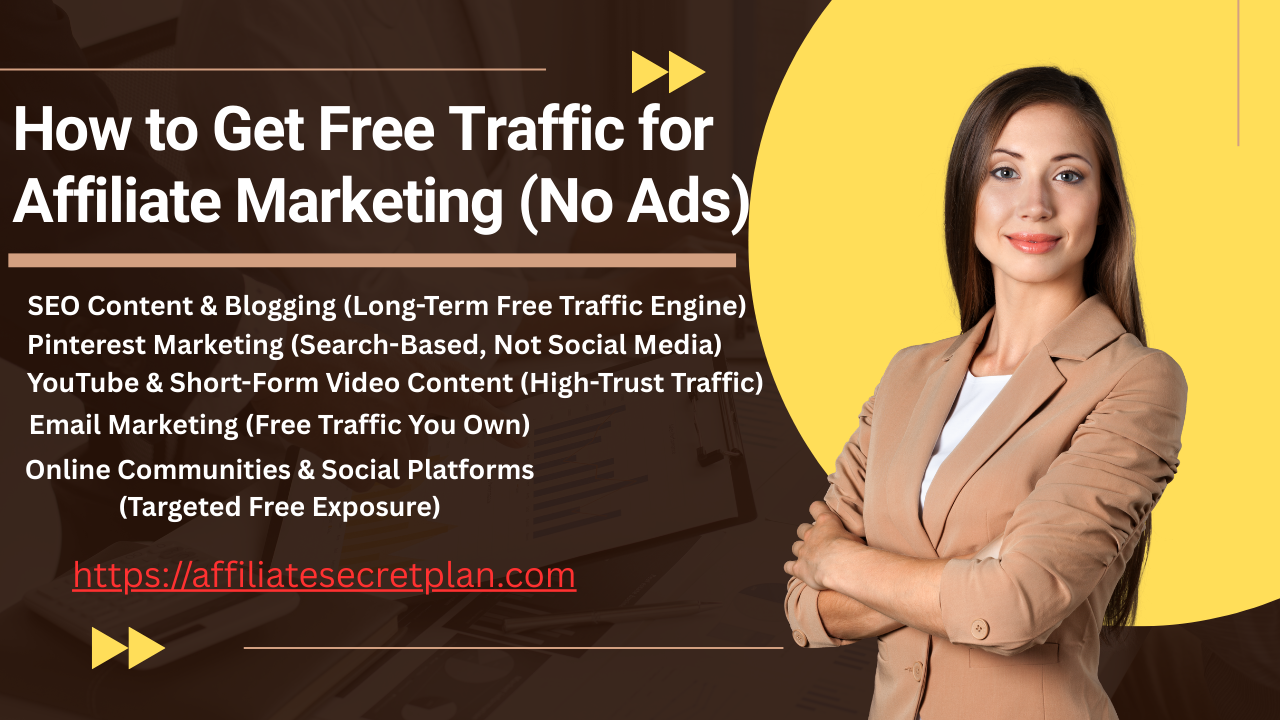
SEO Content & Blogging (Long-Term Free Traffic Engine)
If free traffic had a “set it and forget it” option, SEO content and blogging would be it. While it won’t send thousands of visitors overnight, it will quietly work in the background like a loyal employee who never asks for a raise. SEO-driven blog content allows your affiliate links to show up right when people are actively searching for solutions, reviews, and recommendations—aka the best possible time to promote affiliate products.
At its core, SEO content is about answering questions better than anyone else on the internet. Think product reviews, comparison posts, “best of” lists, and problem-solving guides. For example, someone searching “best email marketing tools for beginners” isn’t casually browsing—they’re likely ready to take action. When your blog post ranks for that keyword, you’re not chasing traffic; traffic comes to you. That’s the real power of SEO for affiliate marketing.
My Best Recommended & Proven Way to Make $100-$300 Daily – Watch This FREE Video to START >>>
Keyword research plays a huge role here, but don’t let the term scare you. You don’t need fancy tools or advanced spreadsheets to get started. Focus on low-competition, long-tail keywords—phrases that are specific and easier to rank for. These keywords may not bring massive traffic individually, but combined, they create a steady stream of targeted visitors who actually convert. In affiliate marketing, 100 highly interested visitors are far more valuable than 10,000 random clicks.
Consistency matters more than perfection. You don’t need to publish daily or write 3,000-word essays for every post. One or two well-optimized articles per week is enough to build momentum. Pay attention to on-page basics like clear headings, internal links, readable formatting, and matching search intent. In other words, write for humans first, search engines second—Google has gotten smart enough to notice the difference.
The best part? SEO traffic compounds. A single article written today can bring in visitors—and commissions—months or even years down the road. Unlike social posts that disappear in hours, SEO content sticks around. It’s slower than ads, sure, but it’s also cheaper, safer, and far more sustainable. If you’re serious about affiliate marketing without ads, blogging with SEO isn’t optional—it’s your long-term traffic engine.
Pinterest Marketing (Search-Based, Not Social Media)
When most people hear “Pinterest,” they think recipes, home décor, or wedding boards—not affiliate marketing. That’s a mistake, and a costly one. Pinterest isn’t really a social media platform at all; it’s a visual search engine. People don’t scroll Pinterest to see what their friends are doing—they use it to find ideas, solutions, and inspiration. That makes it a perfect match for affiliate marketing, especially if you’re looking for free traffic without ads.
Unlike Instagram or Facebook, Pinterest content doesn’t die in 24 hours. A single pin can bring traffic for months, sometimes even years, after it’s published. Think of each pin as a mini search result pointing back to your blog, landing page, or resource. When someone searches for things like “make money online tips,” “best blogging tools,” or “affiliate marketing for beginners,” your pin can show up right when they’re actively looking. That’s high-intent traffic—and yes, Pinterest delivers plenty of it.
My Best Recommended & Proven Way to Make $100-$300 Daily – Watch This FREE Video to START >>>
Pinterest SEO is simpler than it sounds. It comes down to using the right keywords in three main places: your pin title, pin description, and board name. If your blog post is optimized for search engines, you’re already halfway there. Create eye-catching pins, write clear descriptions that explain what the user will learn, and let Pinterest do what it does best—match your content with the right audience. No dancing, trending audio, or awkward pointing at text required.
For beginners, consistency beats volume. You don’t need to pin 50 times a day or use expensive scheduling tools. Posting a few high-quality pins per day—linked to valuable content—is more than enough to get traction. The key is patience. Pinterest traffic usually starts slow, then suddenly picks up once the algorithm trusts your account. It’s a little like planting seeds: nothing happens at first, then one day things start growing all at once.
If you enjoy creating visuals (or don’t mind using simple templates), Pinterest can become one of your strongest free traffic sources. It works quietly in the background, sends targeted visitors to your content, and doesn’t demand constant attention. For affiliate marketers who want long-term, low-stress traffic without ads, Pinterest is seriously underrated—and absolutely worth using.
YouTube & Short-Form Video Content (High-Trust Traffic)
If blogging and Pinterest are the quiet workers of free traffic, YouTube and short-form video are the trust builders. People don’t just read your content here—they see you, hear you, and decide whether they trust you in about five seconds. That might sound intimidating, but it’s actually a huge advantage for affiliate marketing. When viewers feel like they know you, they’re far more likely to click your links and take your recommendations seriously.
YouTube is the second-largest search engine in the world, which means people go there with questions, not just to watch cat videos (although those still win). Tutorials, reviews, comparisons, and “how-to” videos work extremely well for affiliate marketing because they solve real problems. Someone searching “best email marketing tool for beginners” or “how to start affiliate marketing” is already interested. Your job is simply to explain things clearly, honestly, and without sounding like a late-night infomercial.
My Best Recommended & Proven Way to Make $100-$300 Daily – Watch This FREE Video to START >>>
Short-form platforms like YouTube Shorts, TikTok, and Instagram Reels help you get discovered faster. These videos don’t need fancy editing, perfect lighting, or a Hollywood voiceover. A phone, decent lighting, and clear audio are enough. Short videos are great for quick tips, mistakes to avoid, or simple explanations that lead viewers to a longer YouTube video or blog post. Think of them as traffic starters, not full sales pitches.
Promoting affiliate links with video should feel natural. Add links in your video description, pin a comment, or direct viewers to a free resource first. The goal isn’t to sell immediately—it’s to help. When people get value from your content, they’ll check your links without feeling pressured. Trust converts better than hype every single time.
The biggest mistake beginners make is waiting until everything is “perfect.” Spoiler alert: it never will be. Your first videos won’t be amazing, and that’s completely normal. What matters is consistency. Over time, videos stack up, trust builds, and traffic grows. For affiliate marketers who want loyal, high-quality traffic without ads, YouTube and short-form video aren’t optional—they’re a powerful long-term asset.
Email Marketing (Free Traffic You Own)
If there’s one traffic source every affiliate marketer eventually wishes they started earlier, it’s email marketing. Why? Because email is the only free traffic source you actually own. Google can change an algorithm, social platforms can limit your reach, and accounts can disappear overnight—but your email list stays with you. It’s like having direct access to your audience’s inbox instead of hoping a platform feels generous today.
Email marketing works best when it’s not treated like a nonstop sales machine. The goal is to build a relationship first. This usually starts with a simple lead magnet—a free checklist, guide, resource list, or mini training that solves one small but specific problem. Visitors give you their email in exchange for value, and suddenly you’re no longer depending on one-time traffic. You’ve turned a casual visitor into a repeat visitor, and that’s where affiliate income really starts to grow.
My Best Recommended & Proven Way to Make $100-$300 Daily – Watch This FREE Video to START >>>
You don’t need a complicated funnel to begin. A basic setup works just fine: a welcome email, a few value-packed follow-ups, and occasional recommendations that genuinely help your audience. Share tips, mistakes to avoid, tools you personally use, or lessons you’ve learned. When you do promote affiliate products, they should feel like helpful suggestions—not surprise sales pitches. If your emails are useful, people won’t mind seeing a link or two.
Another big advantage of email traffic is higher conversions. Someone who’s read your emails for weeks already trusts you far more than a first-time website visitor. That trust means fewer clicks wasted and more people taking action when you recommend something. Even a small email list can outperform large amounts of cold traffic if it’s built the right way.
The best part? Email marketing scales with everything else you’re doing. Blog posts, Pinterest pins, and videos all feed into your email list, and your email list sends traffic right back to your content and affiliate offers. It’s a system that grows stronger over time. If you’re serious about affiliate marketing without ads, email marketing isn’t just optional—it’s your safety net, your amplifier, and your long-term traffic insurance.
Online Communities & Social Platforms (Targeted Free Exposure)
Online communities are where affiliate marketers can get highly targeted free traffic—if they do it right. These are places where people gather to ask questions, share experiences, and look for solutions. Think Facebook Groups, Reddit, Quora, niche forums, and even comment sections on popular blogs. The catch? These platforms reward helpfulness and punish spam. Drop affiliate links everywhere, and you’ll be ignored at best or banned at worst.
The smart approach is to lead with value, not links. Instead of promoting right away, spend time answering questions, sharing insights, and offering genuine advice. When someone asks a question you’ve already written a blog post or guide about, that’s your opening. You’re not “promoting”—you’re pointing them to a helpful resource. Done correctly, this feels natural and earns clicks from people who actually want more information.
Different platforms require different strategies. On Facebook Groups, engagement matters more than links—many groups don’t allow direct affiliate promotion at all. On Reddit, honesty and context are everything; users can smell marketing from a mile away. Quora works well for detailed answers that explain why something works, not just what to use. The common rule across all platforms is simple: help first, promote second.
My Best Recommended & Proven Way to Make $100-$300 Daily – Watch This FREE Video to START >>>
Community traffic may not bring massive numbers, but it brings the right people. These visitors already have a problem, are actively searching for answers, and are far more likely to trust a thoughtful response than a flashy ad. That makes this traffic source especially powerful for beginners who don’t yet have authority or a large audience.
One word of caution: don’t spread yourself everywhere. Choose one or two platforms where your target audience actually hangs out and focus there. Be consistent, be patient, and show up as a real person—not a walking affiliate link. Over time, your name becomes familiar, your advice becomes trusted, and your links get clicked naturally. For affiliate marketers avoiding ads, online communities are one of the fastest ways to get targeted exposure without spending a single dollar.
Conclusion: Choose One Free Traffic Source & Stay Consistent
By now, one thing should be clear: free traffic for affiliate marketing absolutely works—but only if you stop chasing everything at once. One of the biggest mistakes beginners make is trying to blog, post on Pinterest, upload YouTube videos, answer Quora questions, and build an email list all in the same week. That’s not a strategy; that’s a fast track to burnout. The truth is, you don’t need every traffic source to succeed. You need one solid traffic source, done consistently.
Consistency beats talent, tools, and even experience. Whether you choose SEO blogging, Pinterest, YouTube, email marketing, or online communities, the platform matters far less than your ability to stick with it. Free traffic doesn’t usually reward quick wins—it rewards repetition. The people who succeed aren’t doing anything magical; they simply show up when others quit. One blog post a week, a few pins per day, or one helpful video at a time adds up faster than you think.
It’s also important to remember that free traffic compounds. Early on, it may feel like you’re talking to an empty room—and yes, that part is frustrating. But unlike ads, free traffic doesn’t shut off the moment you stop paying. Your content keeps working, improving, and building trust over time. One day, you’ll look back and realize the traffic you once struggled for is now coming in daily without extra effort.
So choose your primary traffic source, commit to it for at least 90 days, and ignore the noise. You can always expand later once you’ve built momentum. Affiliate marketing without ads isn’t about shortcuts—it’s about systems, patience, and consistency. Stick with it long enough, and free traffic stops feeling slow and starts feeling unstoppable.
Thanks for reading my article in this topic How to Get Free Traffic for Affiliate Marketing (No Ads) till the end. See you with another article.